
Loading content…
Loading content…
BULGARIA AS IT IS!
A martenitsa is an ornament of twisted white and red threads, given and worn on 1 March with wishes for health. Related customs exist in neighbouring countries.
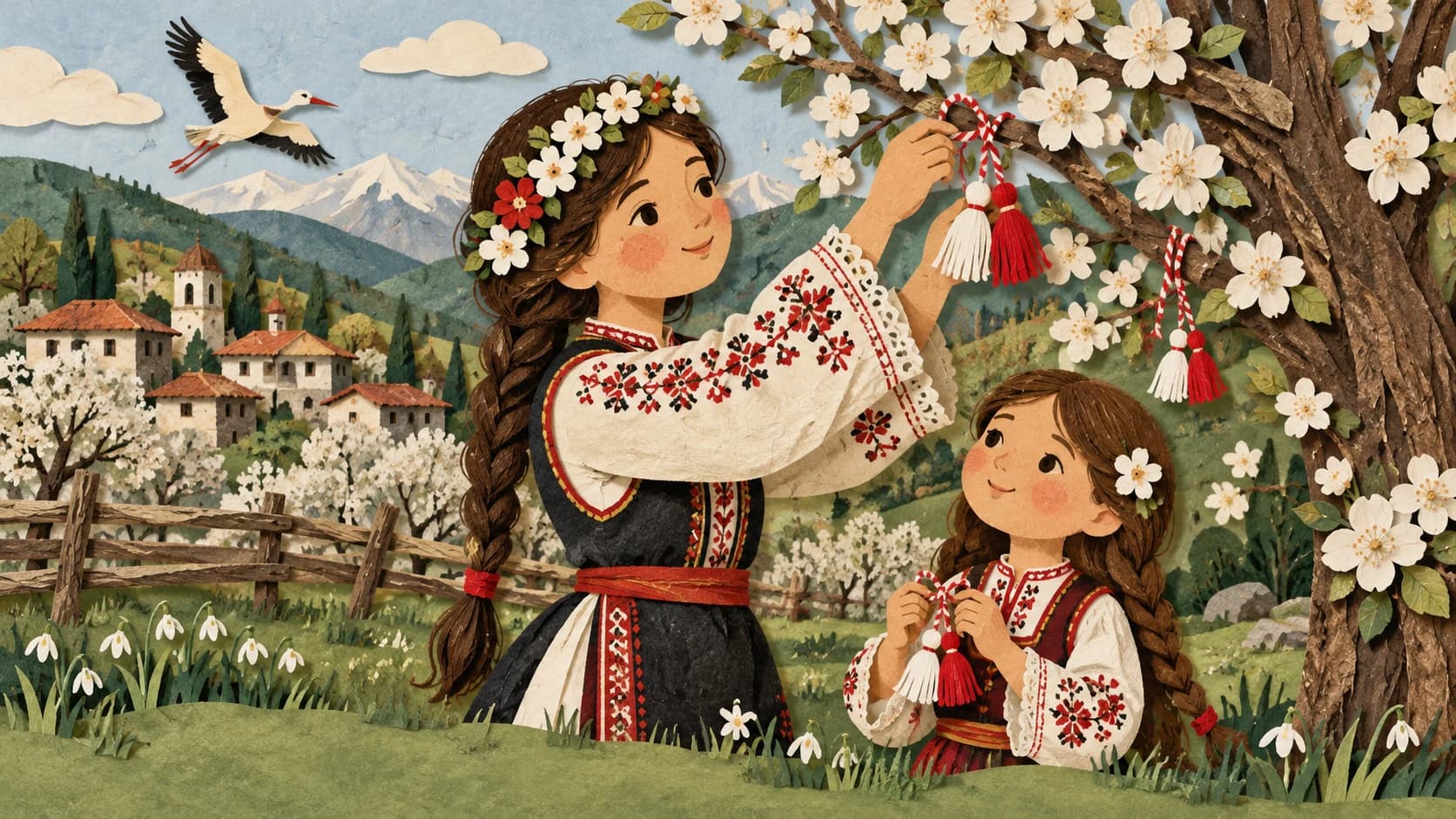
On 1 March people give one another red and white martenitsi with wishes for health. Their origin has many explanations. The connection with Khan Asparuh is a late legend popularised in the 20th century, rather than an established historical beginning. Related practices exist in neighbouring countries.
The earliest moment when someone began tying red and white thread is unknown. It is more reliable to look at what people do and how they explain it: welcoming spring, wishing health and marking winter’s end. UNESCO describes related practices in four countries. This does not diminish the Bulgarian martenitsa; it shows how neighbouring communities developed different names and forms for a shared spring gesture.
A martenitsa is pinned to clothing or tied around the wrist. In many places it is removed at the sight of the first stork, swallow or flowering tree and then left on a branch. The exact rules vary. The essential gesture is giving: a wish reaches another person through an object made or chosen for them.
Red and white threads may be twisted at home, given to a loved one or bought from a craftsperson. They are worn on the wrist, on clothing or in another local way. Removing them at the first flowering tree, swallow or stork connects the ritual object with observing nature. Giving and the wish exchanged between people matter as much as the decoration or the rule about when to remove it.
In 2017 UNESCO inscribed the practices associated with 1 March following a joint nomination by Bulgaria, North Macedonia, Moldova and Romania. The shared red and white thread does not erase local names or ways of wearing it. This diversity shows how tradition changes and continues to live.
The 2017 inscription is shared by Bulgaria, North Macedonia, Moldova and Romania. UNESCO notes transmission through families, craftspeople and museum workshops. It looks different in villages and cities: children may learn to twist thread from older women or in an organised workshop. Both can keep the tradition alive when its meaning is preserved.
Historical information, local examples and current practices were checked against these publications.
Created with ImageGen for СБОРЪ.БГ. An artistic interpretation of the custom, rather than a documentary photograph.
Elena Chochkova · София · 2011 · CC BY-SA 3.0 · Original