

Loading content…
Loading content…
BULGARIA AS IT IS!
Survakane is a New Year custom: participants visit homes, gently tap the hosts with a decorated cornel branch and recite wishes for health and fertility.
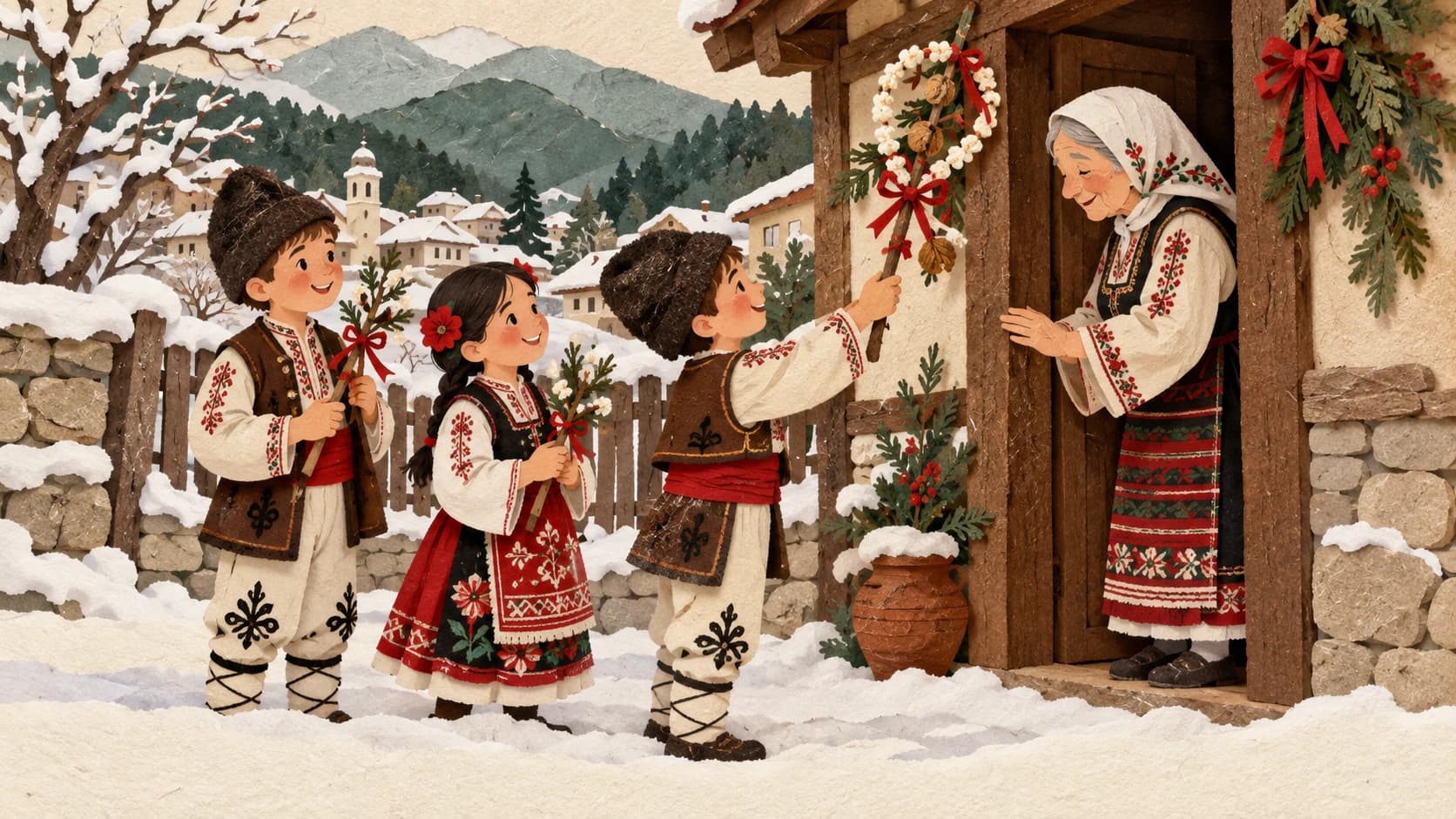
Survakane marks the year’s beginning with spoken wishes accompanied by a cornel branch. Cornel is chosen for its folk associations with strength and vitality. The custom cannot reliably be traced to one ancient ritual. Regional records show that young unmarried men, as well as children, once took part.
The New Year rounds are associated with St Basil’s Day on 1 January. Ethnographer Veselka Baeva explains to Bulgarian National Radio that cornel is valued for its strength and early flowering. This is folk symbolism: a vigorous tree conveys wishes for vitality to people. There is no basis for tracing every survachka to one ancient cult. The custom is known through local variants and living family practice.
On New Year’s Day participants visit relatives and neighbours. They gently tap their backs with the survachka and recite wishes for health, fertility and good fortune. Hosts give them food, fruit or money. Decorations differ; the cornel branch and the good wishes are shared features.
Traditional decorations include threads, dried fruit and other objects suggesting household abundance. The branch does not act alone: the spoken blessing names a good year for fields, gardens, animals and people. A practice called “survakane of water” is documented in the Vratsa region, where spring or fountain water is touched before homes are visited. Such examples show the custom’s variety beyond familiar children’s rounds.
Survakane with a cornel branch is different from the Surva masquerade custom in Pernik. The former consists of New Year visits with good wishes; the latter involves masked groups on 13 and 14 January. Similar names do not mean identical rituals.
In Bulgarian, “survakari” can also mean masked participants in New Year games. Survakane with a cornel stick is nevertheless distinct from Pernik’s Surova as described by UNESCO: masked groups with fire and ritual roles visit villages on 13 and 14 January. Both wish for a good beginning, but their dates, objects and participants differ. This distinction helps visitors understand what they are seeing.
Historical information, local examples and current practices were checked against these publications.
Created with ImageGen for СБОРЪ.БГ. An artistic interpretation of the custom, rather than a documentary photograph.
Vassia Atanassova – Spiritia · България; точното място не е посочено · 2008 · CC BY-SA 3.0 · Original