

Loading content…
Loading content…
BULGARIA AS IT IS!
St George’s Day is celebrated on 6 May. In the folk calendar it is associated with flocks, the first green pasture, ritual breads and a festive meal.
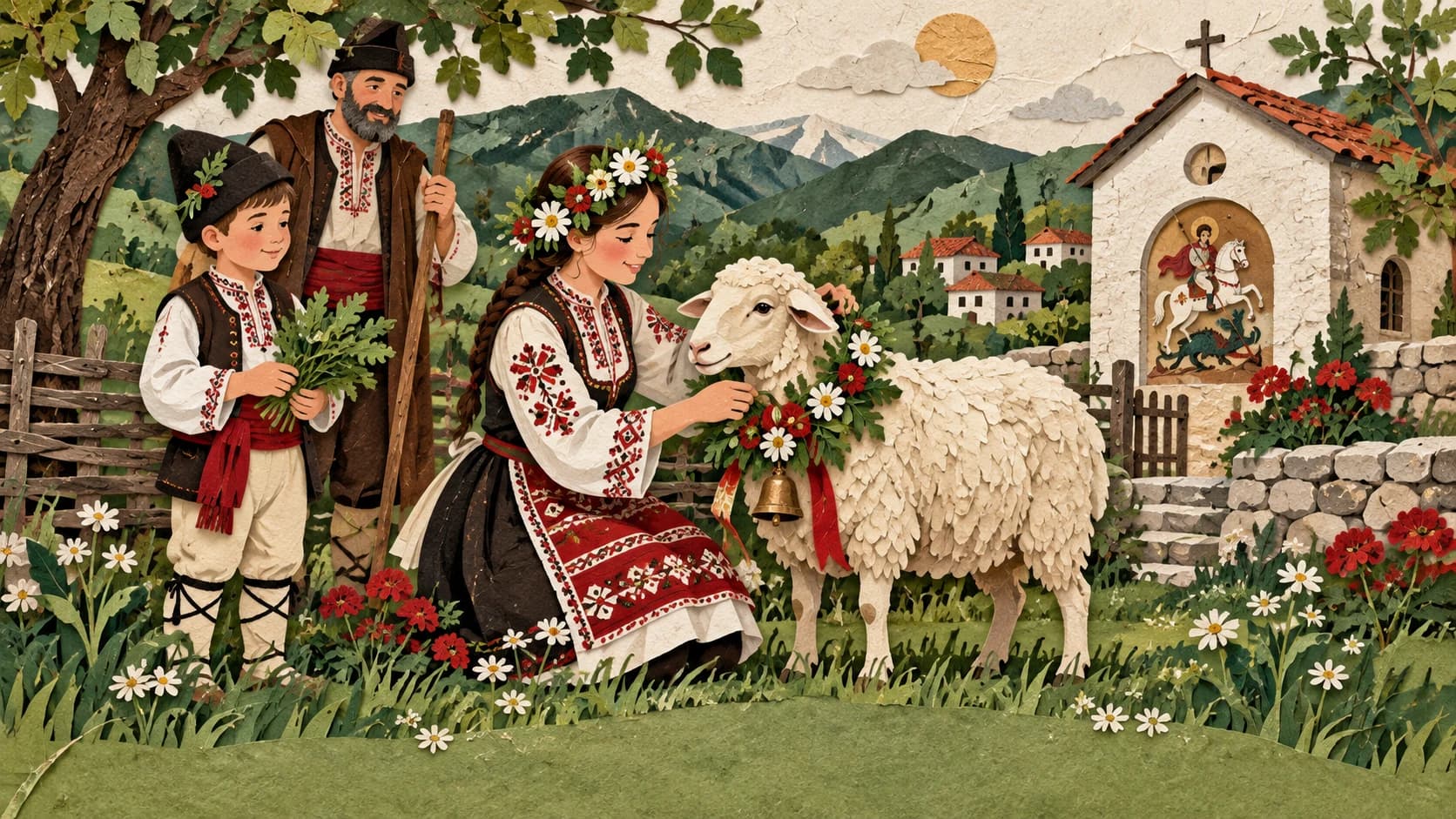
On 6 May the Orthodox Church honours St George. In the folk calendar the day marks an important threshold for herders and farmers: greenery is everywhere and hopes turn to healthy flocks and fertile fields. Christian celebration and older spring beliefs have become intertwined. Every present-day action cannot be traced to one precisely established ancient origin.
For pastoral communities, 6 May is also a marker in spring work. Songs portray the saint as a protector visiting fields and flocks. This is folk poetry, not evidence of an actual event or a certain beginning for the rituals. Christian celebration and hopes for fertility meet in people’s specific actions rather than a universal theory of origins.
In many regions people decorate houses, sheepfolds and animals with green branches. Songs and rituals wish for health and offspring. Some places have outdoor swings and circle dances. These actions vary across the country: local performances preserve their meaning, rather than one compulsory script.
Bulgarian National Radio describes greenery on gates, sheepfolds, first-milking vessels and animals. A wreath may be placed on the first sheep leaving the fold or on the festive lamb. These objects make the seasonal change visible. Branches, songs and the sequence of actions differ, and modern farms may preserve only some of them.
Special breads have different names and decorations. Many families prepare lamb, and in some places neighbours share a communal meal. Bread, food and gathering make wishes for abundance visible. Surviving breads from the Vratsa region show the richness of local festive tables.
Local names include krastashki, shepherd’s bread and kolatsi. Decorations depict flocks, a sheepfold, a cross or a hoped-for harvest, rather than serving only as ornament. Meals may be held at home or shared by the village beside a church or a sacred site. The feast belongs to family, farming and community alike. Families do not need to perform every recorded action for their celebration to be authentic.
Historical information, local examples and current practices were checked against these publications.
Created with ImageGen for СБОРЪ.БГ. An artistic interpretation of the custom, rather than a documentary photograph.
Vassia Atanassova – Spiritia · Етнографско-възрожденски комплекс „Свети Софроний Врачански“, Враца · 2008 · CC BY-SA 3.0 · Original