
Loading content…
Loading content…
BULGARIA AS IT IS!
Kukeri are masked participants in ritual games with different local names, characters and dates. Animal-skin costumes, bells and village rounds are among their best-known features.
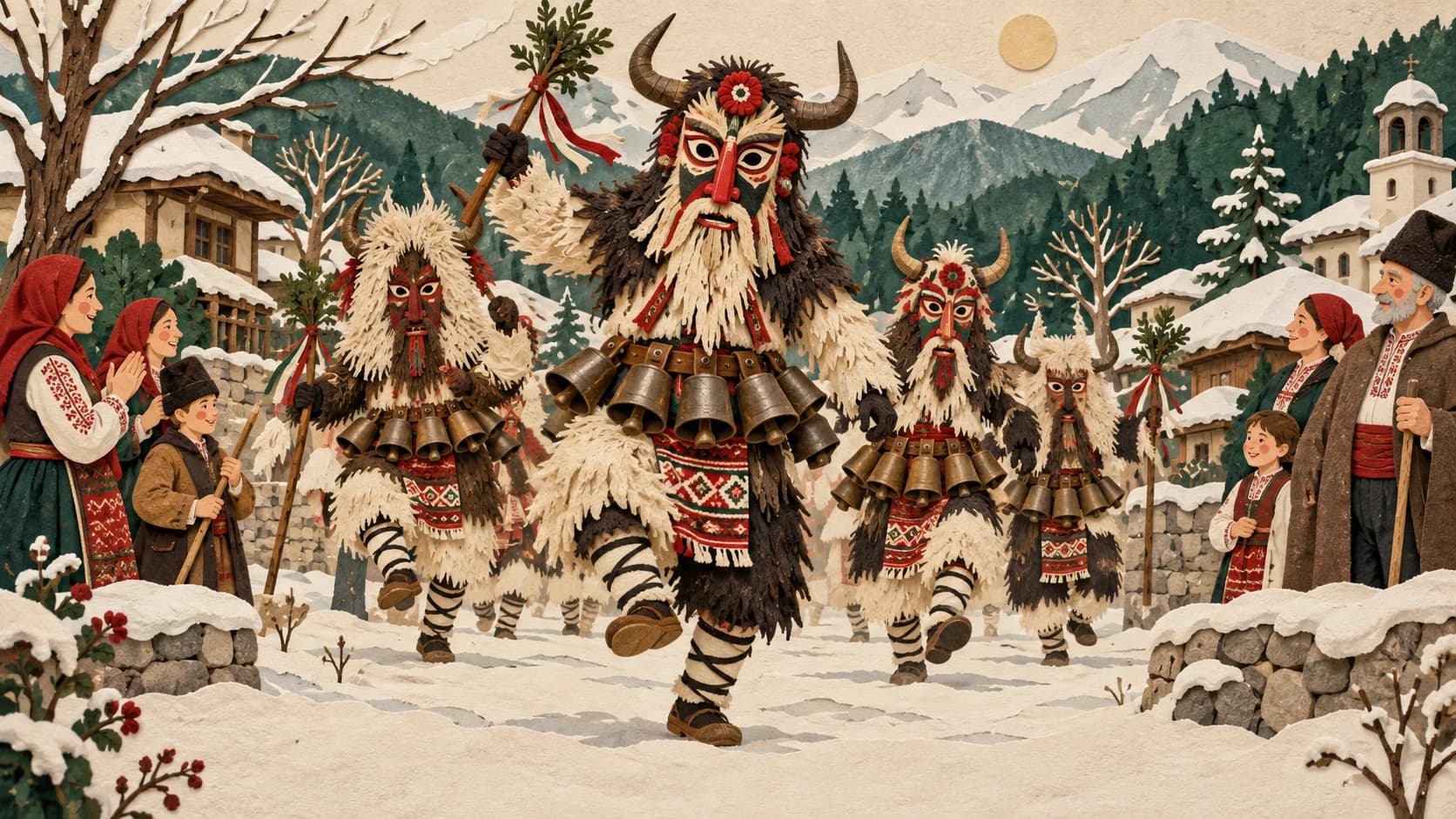
Kukeri and related masquerade games have different names and dates depending on the region. Characters may include a kuker, an old woman, a king, newlyweds and other ritual figures. Participants wear masks and bells, walk around the village and act out scenes for its residents. The customs express wishes for health and fertility; no single ancient origin has been proven.
“Kukeri” is a useful collective name, but the country’s masquerade groups are not identical. Masks, costumes and the sound of the bells follow local tradition. Characters may enact a wedding, an encounter with a bear or other scenes. A photograph from one region should not be presented as an exact model for all. Living local practices are documented; a claim of one proven Thracian origin would go beyond the evidence.
Villages in the Pernik region celebrate Surva on 13 and 14 January. Masked, costumed groups gather around a fire and visit homes. UNESCO inscribed the custom on its intangible cultural heritage list in 2015.
UNESCO’s account of Surova in Pernik highlights preparation: families collect materials for masks throughout the year, and older people teach the young how to make them. On 13 January groups gather by a fire; the following day they visit homes. Newlyweds, a priest and a bear belong to a ritual game wishing health and fertility, rather than simply a costume parade.
The Surva International Festival of Masquerade Games in Pernik brings together groups from different places. It is a different event from the ritual in the region’s villages on 13 and 14 January. Their shared name should not cause the festival programme to be confused with local festive rounds.
After a visit, hosts give food and gifts. UNESCO notes that some of the money collected in Pernik villages goes to people in need, showing the custom’s social role. The large festival in Pernik presents the groups to an audience and keeps them visible, but the village celebration has different dates, routes and relationships between neighbours. The two forms deserve distinct names and context.
Historical information, local examples and current practices were checked against these publications.
Created with ImageGen for СБОРЪ.БГ. An artistic interpretation of the custom, rather than a documentary photograph.
Elena Chochkova · Лесичово, област Пазарджик · 2009 · CC BY-SA 3.0 · Original